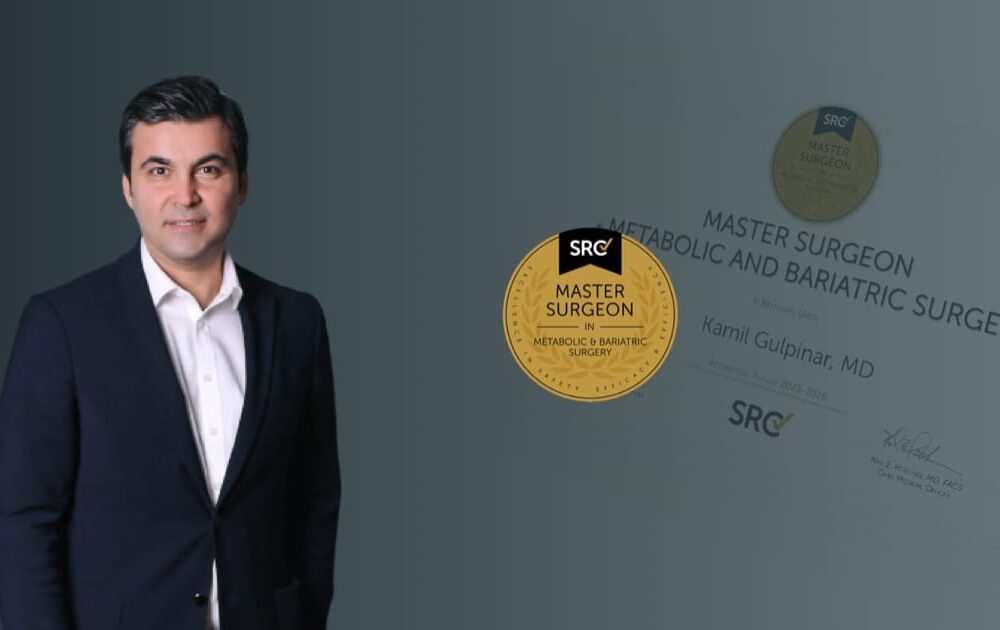
Prof. Dr. Kamil Gülpınar was born in Antakya in 1974. He completed his primary education at İskenderun Namık Kemal Primary School, and his secondary and high school education at İskenderun İstiklal Makzume Anatolian High School. In 1992, he was admitted to Ankara University Faculty of Medicine, and in 2005, he completed his specialization training in General Surgery at the same university's Faculty of Medicine.
Gastric sleeve surgery is an effective obesity surgery that reduces stomach volume, leading to faster satiety. It offers reduced appetite and sustainable weight loss. It also provides significant improvement in many health problems associated with obesity.
Endoscopic gastric balloon placement is a modern, non-surgical weight loss method. The balloon, placed in the stomach, increases feelings of fullness, reduces food intake, and is a quick procedure.
Gastric bypass is an effective weight-loss surgery that reduces stomach volume and bypasses a portion of the small intestine. By reducing food intake and absorption, it provides rapid, lasting weight loss and offers improvement in many diseases associated with obesity.
This is an endoscopic weight loss method that does not require surgery. A balloon placed in the stomach increases the feeling of fullness and reduces food consumption. It is a non-surgical, quick procedure with a short recovery time.
Schedule an appointment to learn about the most suitable treatment option for you and to receive information about the process.
Schedule an Appointment
Let's determine the most suitable treatment option for you together.
Fighting Obesity
We support you on your transformation journey.
Our goal is not just to help you lose weight; it's also to help you take a step towards a healthier, more energetic future with a higher quality of life.
Obesity Treatment Approaches
By analyzing the causes of obesity, we create personalized treatment plans and apply scientific methods for lasting weight management.
Gastric Sleeve Surgery
Appetite control is achieved by reducing the stomach volume. Rapid recovery and sustainable weight loss are ensured with minimally invasive methods.
Gastric Balloon Procedures
A gastric balloon, placed inside the stomach, increases the feeling of fullness, supporting controlled and safe weight loss. It is a non-surgical and temporary method.
Non-Surgical Weight Loss Methods
Endoscopic gastric balloons and other non-surgical methods aim for effective weight loss without the need for surgery.
Gastric Bypass Surgery
It is a method that both reduces stomach volume and regulates intestinal absorption. It is effective in controlling metabolic diseases.
Metabolic Disease Management
A holistic approach is applied to control health problems associated with obesity, such as type 2 diabetes, hypertension, and metabolic syndrome.
BMI Calculation
BMI, or Body Mass Index, is calculated by dividing your height by the square of your weight (kg/m²), and the World Health Organization's reference range is used as a basis. According to BMI results, a value above 30 is considered obese, above 40 is morbidly obese, and above 50 is considered super obese.
Body mass index (BMI), a measure of body fat percentage in adult men and women based on height and weight, is used to determine a patient's suitability for bariatric surgery. The degree of obesity is often determined using this mathematical formula, and the resulting score is directly related to the risk of disease or death. BMI is calculated by dividing your body weight in kilograms by the square of your height in meters. For example, a woman who is 1.60 meters tall (1.60 m) and weighs 80 kilograms has a BMI of 31.
BMI Calculator
BMI:0.0
Normal
Ideal Weight Range
–
Daily Calorie Requirement
–
BMI is only an initial assessment tool. For a definitive diagnosis and treatment plan, you must consult your doctor.
BMI Categories
Weak (< 18.5%)
You may be underweight. A balanced diet and healthy weight gain are recommended.
Normal (18.5 – 24.9)
You are within your ideal weight range. Maintaining a healthy lifestyle is recommended.
Overweight (25 – 29.9)
You are overweight. A balanced diet and regular exercise are recommended.
Obese (≥ 30 )
Health risks have increased. It is recommended that you seek support from a healthcare professional.
Gastric sleeve surgery, when performed by experienced surgeons, is quite safe. Because surgeons perform the surgery using a laparoscopic (minimally invasive) method, the procedure is less invasive than traditional surgeries, and patients recover more quickly. However, there are risks such as gastric leakage, infection, bleeding, and nutritional deficiencies. Patients can significantly reduce these risks if they attend regular post-operative check-ups with their doctor and follow dietary instructions. Most patients successfully lose weight without experiencing any serious complications after surgery. In conclusion, gastric sleeve surgery is an effective and reliable weight loss method for suitable candidates.
What do you experience before gastric sleeve surgery?
Before surgery, your doctor will perform a detailed health screening and assess your suitability for the operation. Tests such as blood tests, endoscopy, chest X-ray, and cardiological examination will be conducted. Healthcare professionals will recommend that you quit smoking and alcohol. You will generally need to follow a low-carbohydrate, high-protein diet before surgery. Sometimes, you will be asked to follow a liquid diet to allow the surgeon to work more comfortably. Your doctor and dietitian will inform you in detail about the surgical procedure. You will be asked to fast and not drink any fluids on the day of surgery, and you are expected to be physically and psychologically prepared.
How much weight can you lose with gastric sleeve surgery?
After gastric sleeve surgery, you can usually lose 60-80% of your excess weight. Success depends on your adherence to a regular diet and exercise plan after the surgery. By adopting healthy lifestyle habits, you can make your weight loss permanent.
What are the advantages of ROUX-EN-Y Gastric Bypass?
Weight loss occurs more quickly with this procedure. Nothing is left inside the body that could shift, break, or compromise its integrity. It has been proven to be a long-lasting surgical option with over 30 years of successful surgery. Patients who choose other surgical procedures experience better overall weight loss, long-term weight control, and improved health outcomes.
Advantages of Gastric Banding Surgery
Reversible and Adjustable: Unlike other bariatric surgeries, this procedure is not irreversible, and the band tightness can be adjusted according to the patient's needs.
The Digestive Process Remains Natural: Because there is no cutting or removal process in the digestive system, food travels along its natural path.
Long-term weight management: The weight loss achieved after surgery can be sustained with regular doctor checkups and lifestyle changes.
Low Surgical Risk: Because it is performed laparoscopically, the recovery time is quick and the risk of complications is low.
Articles
For any questions you may have and for more information, please feel free to contact us.